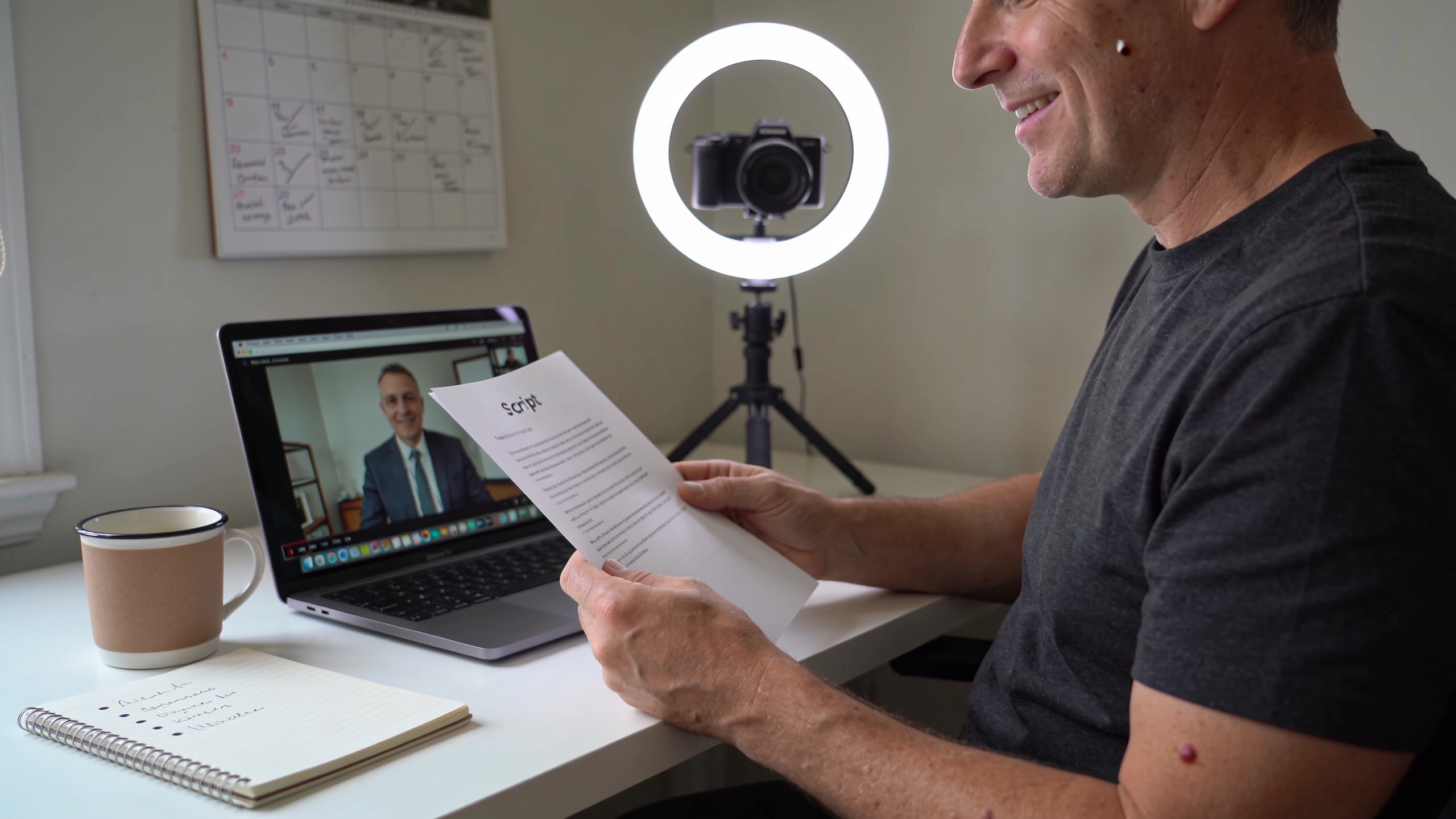
A solo CFP working 55+ hours a week can realistically run a YouTube channel with roughly 5 hours a month — but only if production, strategy, and optimization are handled by someone else. Done-for-you YouTube management exists specifically for this situation: you show up on camera, and a specialized team handles everything else. That's not a shortcut around the work; it's a division of labor that puts your time where it actually matters.
The math on DIY video is brutal. Script research, filming, editing, thumbnails, SEO, publishing, and performance review can easily run 10–15 hours per video if you’re doing it yourself. For an advisor already billing 55+ hours a week, that's not a tradeoff — it's a practice-breaking commitment. The question worth asking isn't whether YouTube can work for your practice. It's whether you can build that asset without dismantling everything else.
What Does 20 Hours a Month of Video Production Actually Include?
Twenty hours a month is a conservative estimate for an advisor producing YouTube content without outside support. Here's where that time goes:
-
Topic research and scripting: 3–5 hours per video to identify what your ideal client is actually searching for, map it to your positioning, and turn that into a structured script
-
Filming setup and recording: 1–2 hours including lighting, audio checks, retakes, and B-roll
-
Editing: 4–6 hours for a polished 8–12 minute video, even with basic software
-
Thumbnail design and title optimization: 1–2 hours
-
SEO, description, tags, and publishing: 1 hour
-
Performance review and iteration: 1–2 hours monthly
Run that for two videos a month — a modest publishing cadence — and you're looking at 20–30 hours before you've touched a client file. That's the version most advisors imagine when they say "I don't have time for YouTube." They're right. That version doesn't fit.
What changes the equation is recognizing that most of those hours don't require you.
Which Parts of YouTube Production Actually Require the Advisor?
The only part of YouTube production that genuinely requires you is being on camera. Your face, your voice, your credibility — those are the trust signals that make a financial advisor's channel worth watching. Everything else is a production and strategy function that a specialized team can own.
Here's a realistic breakdown of where advisor time goes in a fully managed system:
| Task | Who Handles It | Advisor Time |
|---|---|---|
| Topic research & keyword strategy | YT Era team | 0 min |
| Script development | YT Era team | 0 min |
| Script review and light personalization | Advisor | 30–45 min |
| Filming (on camera) | Advisor | 60–90 min |
| Video editing | YT Era team | 0 min |
| Thumbnails, titles, SEO | YT Era team | 0 min |
| Publishing and optimization | YT Era team | 0 min |
| Monthly performance review | Shared | 30 min |
Total advisor time per month: roughly 3–5 hours across two videos. The team carries the production weight; you carry the on-camera credibility.
That 5-hour number isn't aspirational — it reflects what's actually required when strategy, production, and optimization are fully managed. Advisors who try to stay deeply involved in scripting or editing often find themselves drifting back toward 15+ hours. The system works when you let it.
Why Does YouTube Take So Long to Show Results — and Is That Still Worth It?
YouTube is a compounding asset, not an ad campaign. That framing matters because it changes how you evaluate the time investment. An ad stops working the moment you stop paying. A well-produced YouTube video continues attracting views, building trust, and surfacing in search and recommendations for years.
The compounding effect is real, but it requires patience. Most financial advisor channels don't see meaningful organic traction in the first 60–90 days. YouTube’s algorithms need time to learn who your content is for, and watch-time signals take months to accumulate. Advisors who abandon a channel at month three because "nothing happened" are making a common and costly mistake.
What makes the wait worthwhile is the nature of the prospects YouTube attracts. Someone who has watched 45 minutes of your content across three videos before booking a call is not a cold lead. They already understand your philosophy, your communication style, and your areas of focus. That's a different kind of conversation than a referral who knows your name but nothing else about how you work. YT Era has produced over 1,200 videos in the financial services niche. The pattern is consistent: channels that publish consistently with a clear positioning strategy build an audience that converts at a higher quality, even if the volume looks modest compared to other marketing channels.
One qualified client — someone with $500K–$2M in investable assets — can generate fees that cover years of managed YouTube service. That's the math advisors need to run before deciding whether YouTube is "worth it."
How Does a Done-for-You YouTube Service Handle Compliance?
Compliance is where most generic video agencies fall apart for financial advisors. A content team that doesn't understand FINRA's advertising rules, the SEC's marketing rule, or your firm's specific pre-approval requirements can create real liability — not just awkward disclaimers.
Done-for-you YouTube management built for financial advisors operates differently. YT Era is fluent in the FINRA/SEC compliance constraints that shape what advisors can and can't say on camera — including performance claims, testimonials, and the distinction between education and advice. Scripts are developed with those guardrails built in, not retrofitted after the fact.
That said, compliance sign-off is always the advisor's firm's responsibility. No outside production team can approve content on behalf of your broker-dealer or RIA compliance department. What a specialized service can do is deliver scripts and finished content that arrive pre-formatted for your firm's review process — reducing revision cycles and making compliance approval faster and less painful.
For advisors at independent RIAs, this often means fewer back-and-forth edits. For those under a broker-dealer, it means content that arrives already structured to meet common pre-approval standards. Either way, the compliance fluency of your production partner matters more than most advisors realize until they've worked with a team that doesn't have it.
Is Done-for-You YouTube Right for Every Solo Advisor?
Not every advisor is a fit for this model, and it's worth being direct about that.
Done-for-you YouTube management works well for advisors who:
-
Are comfortable on camera, or willing to get there with some coaching
-
Have a clear niche or target client they can articulate
-
Are willing to commit to a consistent publishing schedule over 6–12 months
-
Understand that YouTube builds authority over time, not overnight
It's a harder fit for advisors who:
-
Are deeply uncomfortable on camera and unwilling to work through it
-
Have no defined target client and want the channel to "reach everyone"
-
Expect leads in the first 30 days
-
Want to stay hands-on in scripting and editing (the model works when you delegate)
YouTube requires you to be present on camera. That's non-negotiable for a financial advisor building trust with prospects who will eventually hand you their life savings. If that's a hard stop, no production system changes it.
For advisors who clear those hurdles, the model is straightforward: you spend roughly 5 hours a month on camera and in light review, and a specialized team builds the compounding authority asset around that. The Answer Content Engine at YT Era is built to handle exactly this production workflow — strategy, scripting, editing, optimization — so the advisor's time stays focused on advising.
Building a YouTube Channel Without Burning Out
A solo CFP working 55+ hours a week doesn't need to choose between growing their practice and having a life. Done-for-you YouTube management makes it possible to build a compounding authority asset on roughly 5 hours a month — but only if the right team is handling the other 15–20 hours of production work.
The referral hamster wheel is a real problem. Referrals are unpredictable, they don't scale, and they give you no control over who shows up in your pipeline. YouTube, done right, changes that dynamic over time — attracting prospects who already trust you before the first call, who found you because of what you know, and who are a better fit for how you work.
If you're at the point where you know YouTube is the right move but can't see how to fit it into an already-maxed schedule, reach out to the team at hello@ytera.com. It's a real conversation about whether this fits your practice — no pressure, no pitch.
Checklist
-
Audit your current weekly hours before starting any YouTube initiative — if you're already at 55+, DIY production isn't realistic without dropping something else
-
Identify your one target client type before any video is scripted; a financial advisor channel without a defined niche takes much longer to gain traction
-
Evaluate any done-for-you YouTube service for financial advisors on whether they understand FINRA/SEC compliance constraints, not just general video production
-
Plan for a 6–12 month runway before expecting meaningful organic reach — channels that stop at month three rarely see the compounding effect
-
Limit your monthly time commitment to filming and light script review — if you're being pulled into editing or SEO, the managed system isn't working as designed
-
Run the client math before deciding — one qualified client with $500K–$2M in investable assets changes the ROI calculation significantly
FAQ
How many hours a month does a financial advisor actually need for a managed YouTube channel?
With a fully managed done-for-you service, most advisors spend roughly 5 hours a month — primarily on filming and a brief script review. Strategy, scripting, editing, thumbnails, SEO, and publishing are handled by the production team. Advisors who try to stay involved in production tasks often drift back toward 10–15 hours, which defeats the purpose of a managed model.
What parts of YouTube production can't be outsourced by a financial advisor?
Being on camera is the one element that can't be delegated. A financial advisor's face, voice, and credibility are the core trust signals that make the channel work — no production team can replicate that. Everything else — research, scripting, editing, optimization, publishing — can be fully managed by a specialized service.
How long does it take for a financial advisor's YouTube channel to generate leads?
YouTube is a compounding asset that typically takes 6–12 months to build meaningful organic traction. Early videos accumulate watch time and surface in search and recommendations over time. Advisors who expect leads in the first 30–60 days usually abandon the channel before the compounding effect kicks in. Consistent publishing over a longer runway is what separates channels that build authority from ones that stall.
How does a done-for-you YouTube service handle FINRA and SEC compliance for financial advisors?
A specialized service like YT Era develops scripts and content with FINRA/SEC advertising constraints already built in — avoiding performance claims, managing testimonial rules, and distinguishing education from advice. However, final compliance approval always rests with the advisor's broker-dealer or RIA compliance department. A good production partner reduces revision cycles by delivering content pre-formatted for firm review, but they cannot approve content on behalf of your firm.
Is YouTube worth it for a solo CFP with a small practice?
For a solo CFP with a defined target client and a willingness to be on camera, YouTube can be one of the most cost-effective long-term marketing assets available. The key variable is quality of prospects, not volume — advisors report that YouTube viewers who book calls have already spent significant time with their content and arrive with a much higher level of trust than cold referrals. One qualified client can cover years of managed service costs.
What makes a financial advisor's YouTube channel fail?
The most common failure patterns are: no defined niche (trying to reach all investors), inconsistent publishing (stopping at month two or three before organic traction builds), and over-involvement in production tasks that slow the publishing cadence. Compliance missteps from working with agencies unfamiliar with FINRA/SEC rules are also a real risk. Channels that work have a clear positioning, a consistent schedule, and a production system that doesn't depend on the advisor doing everything.
Can a financial advisor start YouTube without being a natural on-camera personality?
Yes — but on-camera comfort is a skill that requires practice, not a personality trait you either have or don't. Most advisors find that their first 5–10 videos feel awkward, and that discomfort fades significantly by video 15–20. The advisors who build successful channels are rarely the most polished presenters; they're the ones who show up consistently and communicate clearly about topics their target client actually cares about.